Tuesday, May 3, 2011

Bumbershoot

As I write this, there's a torrential downpour just outside my window. Which is, I should mention, an enormous picture window in the third story of a circa-1900 office building. I have an excellent view of downtown Asheville, including a gloriously gaudy art deco cafeteria and, beyond that, the blue-patina copper on two church steeples. I can also see the ankle-deep water running riot down the streets, and people scurrying helplessly from the onslaught. Which, of course, led me to think of umbrellas.

Image from unebricoleuse.blogspot.com

I always have an umbrella in my over-sized bag, though it's nothing particularly charming or fashionable. It gets me to work and back relatively dry and it's black so it goes with everything. But (like most things) there used to be an artistry to umbrellas — back before they were $9 items to be picked up at Walgreens and buried in a purse. This image is from the delightful Some Girls Wander By Mistake blog by Ms. Emily Winfield, who not only has charming things to say about life and an exquisite eye for design, but is also a fabulous artist:


And finally (as the clouds part a bit, even as the thunder continues to rumble and lightning sparks the sky) a brass band tires of waiting out the storm and a shrill trumpet blares beneath my window. A bit of bold color on a dark May afternoon:

Image from theglamourai.com

Wednesday, April 20, 2011

Slip stream

Now that it's warm and lovely (and, on certain days, hinting at summery) I've been thinking about slip dresses. The kind that are, indeed, actual vintage slips worn as dresses.

Image from lauralevine.com

Here's my story: The summer I graduated from high school I borrowed a knee-length off-white cotton Victorian slip to wear under my acetate graduation robe. The slip was my mother's — at the time she was an avid fan of estate auctions where she sought out Victorian relics. Kid gloves, high button boots and the like. The slip likely came in a grab box — a cardboard carton full of random ephemera that the auctioneer sold for a few dollars. Mom bought those, hoping for hidden treasure.

Image from syriekovitz.com

I might not remember that slip at all, except that 1) the acetate robe was so horrific that the vintage cotton and lace was all that saved the say. And 2) my fashion hero Michael Bastian was there. At the time he was yet to become a designer. He was probably 25 and still mainly just the big brother of my classmate. But he'd always encouraged my enthusiasm for clothing and that day he commented on the Victorian slip. And so, there it is.

Image from weardrobe.com

That's my slip story (indeed, it's recently worked its way into the story of a vintage-obsessed character I'm working on in a novel-in-progress); I hope this summer many other vintage-obsessed fashionistas write their own stories in slip dresses. One more picture for inspiration:

Image from houseofvintage.net

Monday, March 28, 2011

Pendantic

Skeleton key pendant from Nesting Nomad

Having been a scarf girl all winter, the warming days have got me thinking about how I'll decorate my neck for summer. For the past couple of years I've been resolutely anti-necklace, but there were phases in the past when I'd pile on strands of beads or Indian-import pendants of amber or lapis.

Mourning locket from Lyonesse 4 Gems

It's the pendants that are calling to me now, though in vintage shapes rather than exotic baubles. Things that speak of darkened attics, secret compartments, treasure chests and dusty velvet boxes. So, I did a little Etsy window shopping.


This circa-1962 "Limoges Jewels from France" pendant (above) from Stix and Stones Vintage is both spooky and pretty, the dark-haired beauty floating all ghost-like in a silver bezel.


Another take on the cameo comes from The Vintage Vanity, based here in Asheville. I've bought jewelry from this shop before and love how the artist reuses old and cast-off pieces in new ways. Above, it's "a vintage butterfly pendant, vintage cameo pendant, vintage floral earring with rhinestone centers, vintage glass cut bead, and vintage/reused chain."


Nesting Nomad, also from Asheville, is one of my favorite jewelry designers. She also uses vintage and antique found items, though some (skeleton keys, pieces of old maps, copper coins) were never intended as jewelry. This antique brass locket was meant as decoration. With a brass chain and an attached aqua bead, it seems other-worldy and magical.

Thursday, March 24, 2011

Of Goth and Peter Murphy


I recently had an interview with Peter Murphy (above) of Bauhaus. One of the things he told me was that Goth was never his thing and he kind of wants to refuse the whole "Father of Goth" title, but he also takes it as a compliment.

Image from HubPages

I get that, but I also get the sleepy, sexy draw of Murphy's iconic voice. Within his own heart, Murphy may be all things light, but his music emanates a seductive darkness. Murphy's velvet purr alone carries all the drama and intrigue of an interview with Lestat himself; on stage the singer's carved cheekbones, luminous gaze and the narcotic embrace of his baritone are spellbinding.


Needless to say, I've been thinking about Peter Murphy a lot lately. And about how, even if he didn't set out to create the Goth scene, we still owe him a dept of gratitude for a haunting and achingly-lovely soundtrack.

Image from Chictopia.com

My earliest gothic intrigue was when I was 16, still in high school but living away from home. It was a snowy winter, I had a corner in a garret apartment with mattresses on the floor a white pet rat named Valentine who chewed her way out of her cage and became feral behind the appliances. A strange time of writing poems huddles under blankets in the kitchen and strolling through the sparse browns and grays of the cemetery in a leather jacket and frayed black skirt.

Image from NYPress.com

Only later — in warmer and better furnished apartments — did I come to realize the artistic integrity and the elegant aesthetic of goth. It's not only a style to be adopted by girls in black nail polish, clutching Ann Rice novels to their chests. It's not only a uniform of torn fishnets and fussy chantilly lace. Nor is it the mass-produced commercial property of Hot Topic.

Image from Used & Abused Vintage

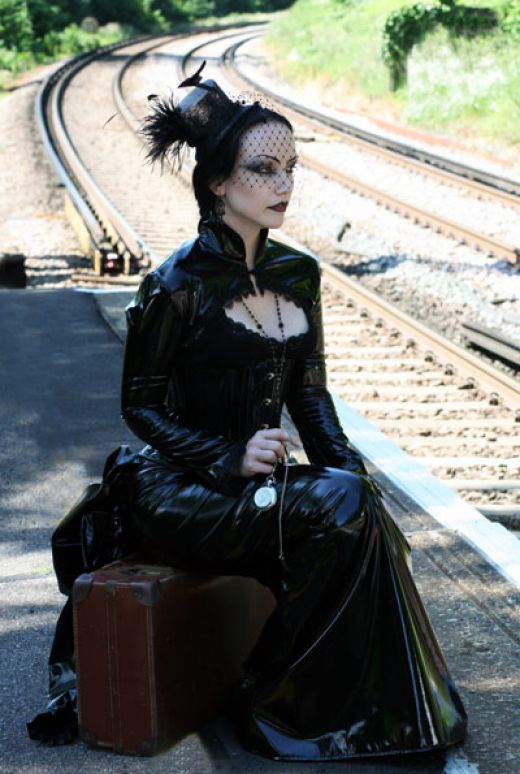
Today, even those of us too old and/or too ensconced in the establishment for full goth attire can still adapt a piece here and there. Thanks to steampunk, Coraline, The Nightmare Before Christmas and Helena Bonham Carter there's plenty of mainstream-ish inspiration. A handmade pieces from Etsy, a Victorian frock coat, a pair of button shoes, and antique broach and maybe a Bauhaus album for atmosphere...

Wednesday, March 23, 2011

The timelessness of trousers


According the Fashion Encyclopedia, "Like many of the popular fashions of the 1930s, the pants suit was associated with a Hollywood starlet. Actress Marlene Dietrich (c. 1901–1992) wore men's clothes in many of her movies, but she was especially known for wearing masculine suits in her public appearances. Women's pants suits generally had flared or bell-bottomed trousers, and the jackets were tailored in slightly softer versions of men's styles."

McCalls pattern from 1934

French designer Paul Poiret is credited among the first to create women's pants — his were harem pants in 1913, inspired by the opera Sheherazade. Coco Chanel also did much to further women's trousers into mainstream fashion, though it was sheer practicality that was probably the swiftest harbinger of the change in female style.

1940s-era photograph from FashionRising.com

First during WWI and then again — and more so — in WWII, women had to pick up the slack in the American work force. Trousers were preferred (and accepted) as work wear. Watch the 1984 Goldie Hawn/Kurt Russell film Swing Shift for inspiration.


But certainly it was icons like Dietrich (above) and the fabulous Katharine Hepburn (both born during the Edwardian era — when corsets were still being worn) who elevated trousers from workwear to chic apparel. Both women emanated such self-possessed cool and glamor, both portrayed femininity with a hint of androgynous magnetism. Hepburn (top of the post) especially embodied timeless allure. That quality, of course, had everything to do with her comportment, her grace and her magnificent talent. But those trousers certainly didn't hurt.

Wednesday, January 12, 2011

An Oxford education

There's something so perfectly put together and elegant about an Oxford shoe. Like the trench coat and the fedora, the Oxford is a classic that defies trends (though, like the classics, it's often readopted and reinterpreted under the auspices of trend).


According to Wikipedia (which one should always take with a grain of salt), "Oxfords first appeared in Scotland and Ireland, where they are occasionally called Balmorals. In France, Oxfords are better known under the name of Richelieu." Brogues refer to a low-heeled style of shoe traditional to menswear and are "characterized by multiple-piece, sturdy leather uppers with decorative perforations (or 'brogueing') and serration along the pieces' visible edges."


The shoes evolved out of a rough, outdoor footwear fashioned from untanned leather; their modern counterparts are almost universally appropriate (we're still talking menswear here) and often associated with refined locales and activities.


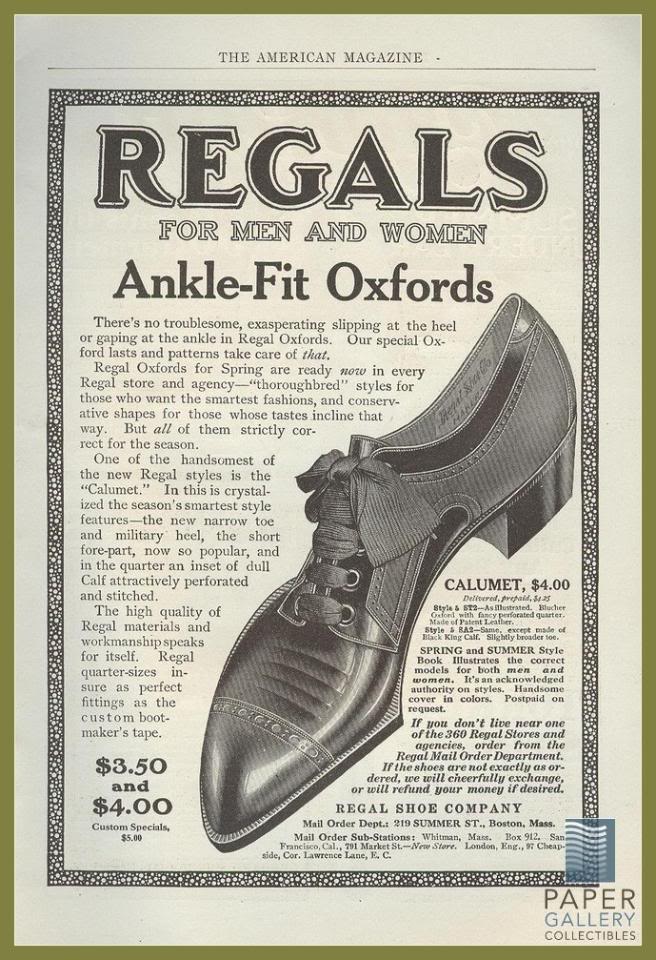
Says fashion blogger Yangjing21, "During the 1960s men’s brogues got a further makeover by becoming available to buy in two-tone rather than just in browns and blacks. By this time they were even being adapted to be worn by women." A decade early, Saddle Shoes — a relative of the Brogue or Oxford — rose to popularity for both males and female (typically teens and children). Menswear details have made their way into women's wear since early in the last century — a 1908 advertisement that sold on ebay illustrates a unisex pair of oxfords.


My personal favorite Oxfords (search for them on ebay or etsy as "Granny Shoes") have a little heel, some toe detail (a wing tip or a cap) and rich leather in cordovan, chestnut or caramel.

Thursday, November 4, 2010

Monk strap shoes

One of my all-time best back-to-school purchases was a pair of monk-strap shoes made by GAP. I'm not sure what inspired by mother to let me buy the shoes — we didn't have tons of money so there were usually just a few nice, new things from the mall each fall, and then the rest of my back-to-school wardrobe came from Goodwill and places like Fashion Bug or Deb's, or the vintage stores I frequented.


The monk strap shoes were chestnut brown, if memory serves, with a chunky heel. And no one else was wearing them. Must have been around 1989; not a big year for menswear-inspired womenswear. According to Men's Fashion Authority, "Kilted loafers have nothing to do with kilts and monk straps have nothing to do with monks. The name of the loafer relates to the style's characteristic feature: a side buckle which is is purely decorative. You won't have to be fiddling with straps and fastenings, these are infact loafers and the strap and buckle are not intended for function. The buckle, which can vary considerably in size and style, gives the loafer a slightly medieval feel, which is probably the origin of the name."


For me, they were a beautiful shoe, and a classic — though just different enough to not be a penny loafer (preppy) or a wing tip (menswear). I loved the clean line, the elegant simplicity, the way they made jeans a little bit dressy and dresses a little bit reigned-in.


Later, after college and getting ready for a job interview, I revisited the monk strap. It was black this time, in supple leather with silver hardware and a thick, two-inch heel. I didn't get the job, but the shoes quickly became a wear-with-everything staple in my wardrobe. To work at the front desk of a hotel, out to drinks afterwards. Bare-legged with skirts in the summer, paired with sweater tights and turtlenecks when the weather turned cold.


Now that fall is here, I'm thinking about past apparel successes and wondering if it's time to revisit this classic.

Tuesday, September 28, 2010

The Halloween Dress

I'm not a fan of tarty Halloween costumes, though I get it: It's the season of the alter-ego and, lurking in many of us, lives a tarty nurse or tarty pirate wench or tarty Strawberry Shortcake (yeah, I saw that in multiples last year) or, heck, just a tarty tart. But the buttoned-up spinster in my head rails against the idea that every costume has to involve stilettos and a mini skirt.

So, a few years back, I found this dress at Goodwill:

It's '70s-retro and also Morticia Addams-slinky. Add a long black wig and a little Gomez arm candy and you're good to go. Bonus: The long sleeves and maxi length allow for layering underneath in case Halloween falls on a cold night.

Here's another take on the seasonal dress — Halloween/Day of the Dead without actually going all-out costumey:

This dress is a '70s/80s vintage pieces found on ebay. It doesn't have a label, but looks like a Gunne Sax gown from that era. It's almost a prairie dress, with it rows of tiny, emboridered, sorbet-colored flowers. But the dress itself, a sheer gauze layer over rustly taffeta, borrows enough Victorian elements (the high neckline, the gathered cuffs) that, in black, it's more Goth than Laura Ingalls. Pair it with high-button leather boots and an imposing hat and cut a spooky/intriguing figure at any party.

Wednesday, June 2, 2010

The floppy hat

It was, while searching for my own floppy sun hat, that it occured to me to write about this iconic summer item. I've always been a sun hat girl. Too much sun in my eyes gives me a headache so, even as a teen when no one was worrying much about SPF, I was going around in my offbeat collection of caps.

Fashion still for Vogue, 1957, from chrisbeetles.com

These days, hats are "physician endorsed" which means if you actually need a doctor's note to convince you to wear one, the time has come. If, on the other hand, you've been looking for an excuse to get all Hollywood starlet and parade about in the biggest brim and most oversized sunglasses you can find, well, your moment has arrived.

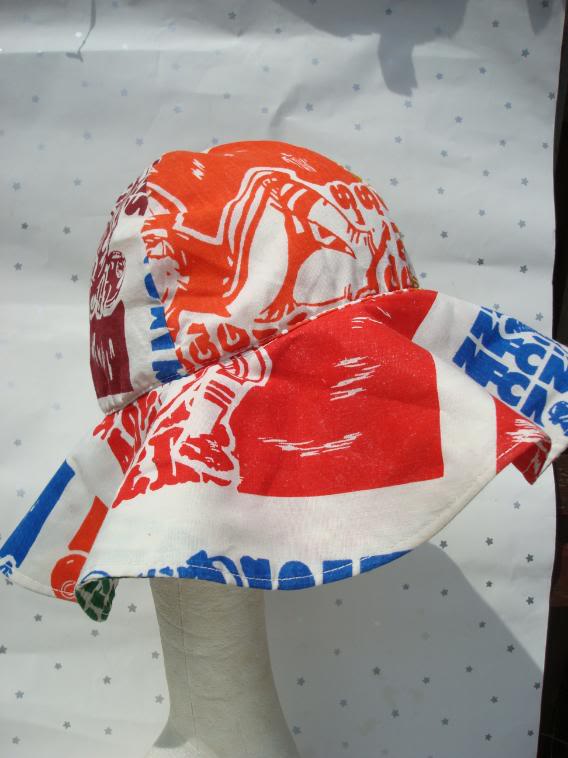
Floppy hats are everywhere. You can buy new ones, of course (they take their cues from the wide-brimmed styles of the 1930s, 40s and 50s, like this embroidered straw beauty), or you can seek out one-of-a-kind vintage hats.


My favorite hat — the one I can't find — is mauve and crocheted. I bought it from a shop that specialized in handmade gifts and though it was new, it had all of the charm of a pool hat from back in the day when palazzo pants and espadrilles equalled a sexy summer outfit. Here's hoping that look — like the floppy hat — comes back around.

Image from 1930s Vogue

Sunday, April 25, 2010

A few of my favorite things

The thing about collecting vintage is that pieces sometimes reveal themselves slowly. Sometimes they come with an obvious narrative — a velvet cloche says 1920s and winter; a pair of long satin gloves speak of elegant ballrooms. Othertimes they are without the specifics of time or place and, out of context of history, seem timeless and poised for the next adventure. Personally, I like the latter best, and among my finds those pieces that have stubbornly demanded that I give them new stories rather than accepting well-worn cliches — those are the ones that become my prized possessions.

The western boots.
Found these in a vintage store in the East Village in New York last spring. My birthday present to myself.

The silver bangles.
These belonged to my mother; I believe she brought them back from San Francisco during the 1970s. I inherited them as a teenager and have worn them ever since.

The dashiki.
This belonged to my husband during his brief Rasta phase. Now I wear it as a summer coverup.

The hand-tooled leather belt.
Found in a Goodwill years ago. It's the perfect size for me and goes with every pair of jeans I own.

The textured clutch.
A recent purchase, this bag is both tough and girly (like me).

The Marc Jacobs trench.
An ebay find; love it for its military styling and the slightly preppy blue and white striped lining.

The canvas handbag.
Charmingly preppy — the decorative whale-print strip is on velcro and meant to be interchanged with other designs — yet also a little boho with the wooden handle. I bought this on ebay when I was looking for a kelly green handbag. This wasn't what I had in mind, but the manufacturer was from Asheville (where I live), probably during the 1960s when the textile industry was huge in North Carolina.

The satin t-strap pumps.
I bought these for my wedding — and wore them with a 30s-era silk dress — but they've come in useful so many times since then. The brown color goes with everything and the t-strap style is timeless.

Monday, April 19, 2010

The great clog comeback

When I was in third grade, clogs were all the rage. Every girl had to have a pair, which resulted in a year of clomping through the elementary school's green-tiled halls. It also resulted in a rash of sprained ankles, which kept the school nurse busy. Lesson (not that anyone bothered to learn it): 9 year-old girls lack the balance and coordination to gracefully manage clogs. (By the next year it was on to mini skirts and tentative crushes on Eric Estrada.)

70s vintage clogs from The Blue Kimono

My mom had clogs then, too — and she could actually walk in them. Hers were dark reddish-brown leather with a stylized toe cap and an ankle strap that buckled. She wore them with India-print wrap-around skirts. We were only just out of the 70s, after all. I coveted them, sitting in her closet strapping them on over my knee socks.

Ankle-strap clogs from The Fab Needle

I think that the Dansko company almost single-handedly kept the dream alive for all the clog girls out there. Kind of ironically, the shoe maker has veered off into thin-soled sandals and a matronly line of heels just as the fashion world is ready to embrace clunky clogs again. Glamour magazine ponders the effect of this trend while Chanel sends clogs down the runway and vintage savvy girls trawl ebay for delightfully retro 70s and 80s wood-and-leather originals.

Thursday, April 15, 2010

The white sundress

I have this vision of the perfect summer outfit. It's both boho and crisp, rockerish and girly, floaty and subtle. Actually, the outfit takes on myriad shapes depending on the day, the event at hand and my mood. But it always involves a vintage white sundress.

Here's a fave from the now-defunct vintage shop Maiden Rapture. Sweet eyelet and a sweetheart/crossover neckline allow for lots of interpretations on how to wear it. Cute flats and a picnic basket? Shortie harness boots and a straw fedora?

Exhibit B: The floaty dress paired with Western boots. Blog The Cowboy Boot Review gets it just right with these two outfits worn by Ashley Olsen (left) and Kate Bosworth. High/low pairings tend to make for easy glamor, so the more feminine and lacy the dress, the more rugged the boot.

Next up: Crochet. Chictopia ran this image of a 3/4 sleeve dress Zara back in the fall; the loose crochet makes this a multi-season dress. Throw it over a bathing suit or a cami and jeans, or fancy it up over a pretty colored slip for a night out.

Moving on to stappy. Here's a disco-y version found on Vintage Jenny. Yeah, it's probably polyester but think how great it will look with tall cork and leather wedges. Or clogs. Or peaking out from under a herringbone menswear vest.

Finally, there's the tube dress. Seems like every decade has its version, from pouffy and corseted to slim and Hawaiian-printed. Terry cloth has made a comeback, thanks to Juicy Couture, but look for a vintage 70s version of that theme, with a color block waist band and (if you're lucky) kangaroo pocket. Here's an 80s-reminiscnet version from ebay. Wear it alone with flip flops for a beachy look, or make it an easy piece under a boyfriend blazer and loose scarf.